Quick Answer:
Armored vehicle rental in Turkey provides B6 and B7 ballistic protection for executives, diplomats, and high-risk travelers requiring bulletproof transportation. BYZAS operates armored Mercedes-Benz Guard vehicles with security-trained chauffeurs across Istanbul, Ankara, and Bodrum. Services include threat assessment, secure route planning, advance coordination, and 24/7 operational support. Vehicles remain within Turkey—no cross-border travel. Professional coordination ensures discreet, reliable protection for sensitive missions, official visits, and high-profile travel. Request your armored vehicle quote.
🚨 SECURITY ALERT: Advance coordination required (48-72 hours) for all armored vehicle assignments.
Secure Your Armored Vehicle in Turkey
B6 & B7 Mercedes-Benz Guard vehicles with security-trained chauffeurs
Request Armored Vehicle Quote →
What is Armored Vehicle Rental? (And Why Turkey?)
Armored vehicle rental provides temporary access to ballistic-protected transportation without the capital investment, maintenance burden, or operational complexity of ownership. In Turkey, this service has evolved from a niche diplomatic requirement into a strategic necessity for international executives, government delegations, and high-net-worth individuals operating in a region where security considerations influence every travel decision.
Turkey occupies a unique geopolitical position—bridging Europe and Asia, bordering conflict zones, hosting millions of refugees, and managing complex internal security dynamics. Istanbul ranks among the world’s most congested cities, where traffic delays expose travelers to predictable patterns that sophisticated threat actors can exploit. Ankara’s concentration of government ministries, embassies, and international organizations creates an environment where protocol failures or security gaps carry diplomatic consequences.
The armored vehicle rental market in Turkey serves clients who face elevated risk but don’t require permanent security infrastructure. Investment banks conducting due diligence in emerging markets, technology executives negotiating joint ventures, diplomatic envoys managing sensitive negotiations, and family offices protecting principals during extended stays—all operate under circumstances where visible security measures provide deterrence without the attention that permanent convoys attract.
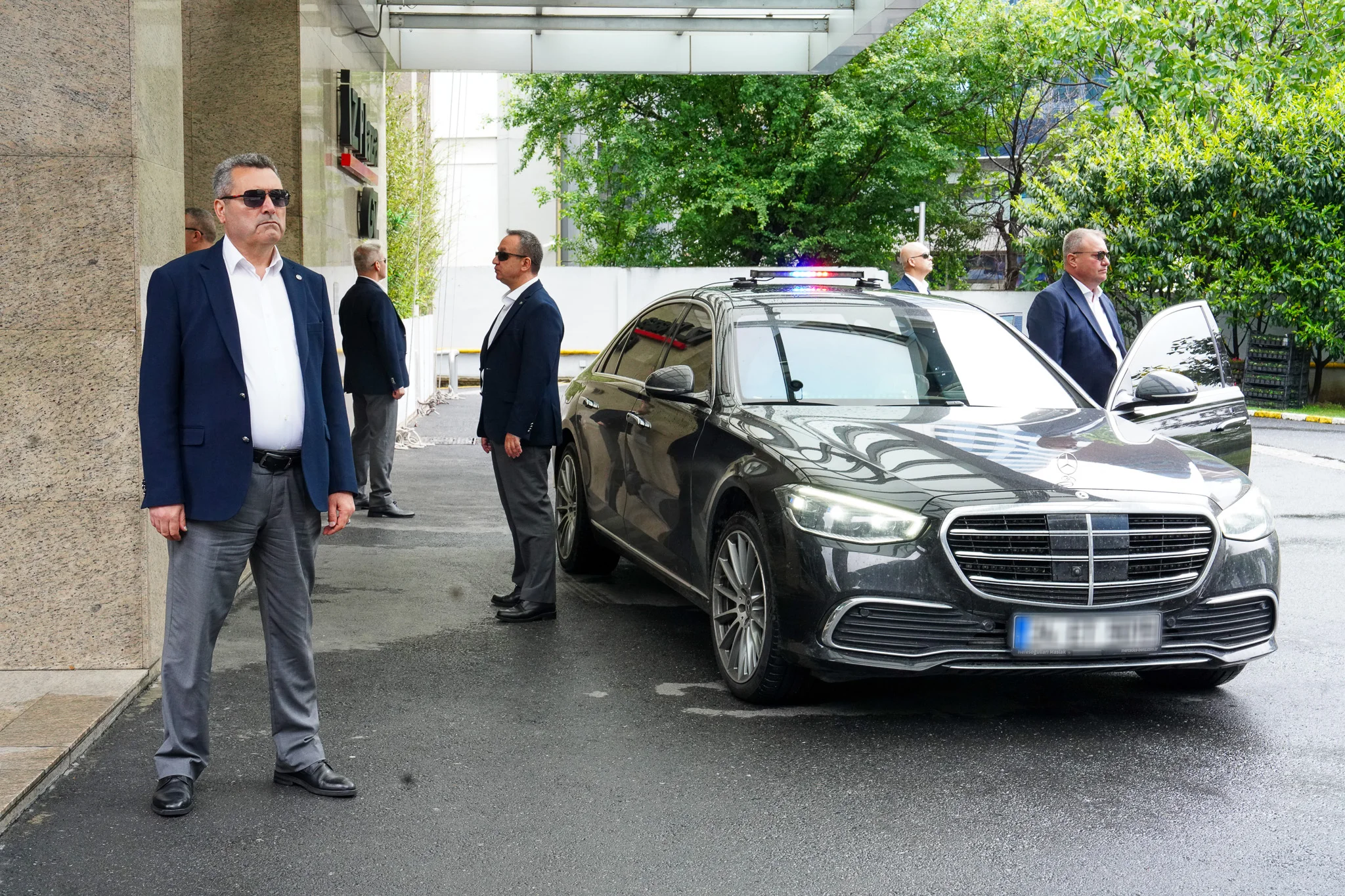
Professional armored vehicle services differ fundamentally from standard luxury transportation. The vehicles aren’t simply reinforced—they’re factory-built by Mercedes-Benz to ballistic specifications, maintaining original safety systems, handling characteristics, and manufacturer warranties. The chauffeurs aren’t drivers—they’re security-trained professionals who understand threat recognition, evasive driving, checkpoint protocols, and crisis communication.
Explore our complete security and executive transportation services designed for high-risk environments.
Who Needs Armored Vehicles in Turkey?
Diplomatic Personnel & Embassy Staff
Foreign service officers, consular employees, and diplomatic families operate under security protocols that mandate armored transportation in designated threat environments. Turkey’s proximity to conflict zones and history of attacks targeting diplomatic facilities means many embassies require armored transport for movements beyond secure compounds. Professional rental services provide scalable solutions—augmenting embassy motor pools during high-tempo periods, supporting temporary duty assignments, or covering maintenance windows when official vehicles are unavailable.
C-Level Executives & Board Members
Corporate leaders traveling to Turkey for board meetings, merger negotiations, facility inspections, or investor presentations face security considerations that insurance companies, risk management departments, and corporate security teams take seriously. Kidnapping-for-ransom remains an enterprise in regions Turkey borders, and high-profile business travelers represent lucrative targets. Armored transportation demonstrates duty-of-care compliance, protects intellectual property during sensitive discussions, and maintains operational security when competitive intelligence is at stake.
High-Net-Worth Individuals & Family Offices
Ultra-high-net-worth families visiting Turkish properties, conducting philanthropic work, or managing regional investments require security measures proportionate to their exposure. The wealth management industry increasingly recommends armored transportation as standard practice in emerging markets—not because incidents are common, but because prevention costs less than crisis response. Family office security managers coordinate armored vehicle rentals months in advance, integrating transportation with residential security, advance reconnaissance, and medical evacuation planning.
Journalists & Media Personnel
Correspondents covering Turkish politics, regional conflicts, or sensitive investigations work in environments where visible security measures attract unwanted attention, yet adequate protection remains non-negotiable. Armored vehicles provide discreet protection—particularly armored SUVs that blend with civilian traffic while maintaining ballistic integrity. News organizations covering elections, protest movements, or government crackdowns increasingly budget for armored transportation as cost-effective insurance against worst-case scenarios.
Government Delegations & International Organizations
Ministers, parliamentary groups, and international organization representatives conducting official visits to Turkey face scheduling constraints that prevent reliance on host-nation security. Professional armored vehicle rental provides autonomous security capability—allowing delegations to maintain their own protection standards, control their own movements, and avoid dependencies that create vulnerabilities or compromise diplomatic positioning.
B6 vs B7 Protection Levels: Which Do You Need?
Understanding ballistic protection standards prevents both under-protection and wasteful over-specification. The armor industry uses standardized ratings—B6 and B7 represent the two levels most relevant for civilian executive protection.
B6 (VPAM BRV 2009 / NIJ Level III) Protection
B6 armoring stops handgun rounds up to .44 Magnum and rifle fire from 7.62x39mm AK-47 ammunition at close range. The protection covers all angles—doors, roof, floor, pillars, and glass receive multi-layer ballistic treatment. B6 vehicles handle:
- Multiple handgun impacts from 9mm, .40 S&W, .45 ACP, and .357 Magnum
- Rifle fire from AK-47 pattern weapons (most common globally)
- Fragment protection from hand grenades at safe distances
- Forced entry attempts using hand tools
B6 represents the minimum credible protection for executive transport in elevated-risk environments. The specification balances security with livability—weight increases remain manageable (typically 400-600kg), fuel economy stays reasonable, and handling characteristics feel similar to standard vehicles. For most corporate and diplomatic travel in Turkey, B6 provides proportionate protection against opportunistic attacks, criminal threats, and low-sophistication targeting. Explore our B6 armored vehicle options.
B7 (VPAM BRV 2009 / NIJ Level IV) Protection
B7 armoring defeats armor-piercing rifle rounds including 7.62x51mm NATO (.308 Winchester) and 5.56x45mm NATO ammunition fired from sniper rifles or battle rifles at close range. This specification protects against:
- Armor-piercing rifle ammunition
- Multiple simultaneous impacts from different angles
- Sustained automatic rifle fire
- Explosive devices producing high-velocity fragments
B7 vehicles carry significantly more weight (800-1200kg over stock) and require upgraded suspension, brakes, and cooling systems. The protection level suits government officials, diplomatic principals, or executives operating in active conflict zones or facing nation-state level threats. For commercial travel in Turkey, B7 typically represents over-specification unless specific intelligence justifies the upgrade.

Choosing Your Protection Level
Risk assessments should drive armor specifications. Consider:
- Threat environment: Opportunistic crime vs. planned targeting
- Profile visibility: Unknown traveler vs. recognizable public figure
- Mission duration: Single meeting vs. extended country presence
- Intelligence: Generic risk vs. specific threat reporting
Most clients in Turkey select B6 for its combination of credible protection and operational practicality. B7 makes sense when specific intelligence elevates threat assessments or when corporate/government policy mandates maximum available protection.
Read our complete guide to executive protection services in Turkey for threat assessment frameworks.
Mercedes-Benz Guard: The Gold Standard
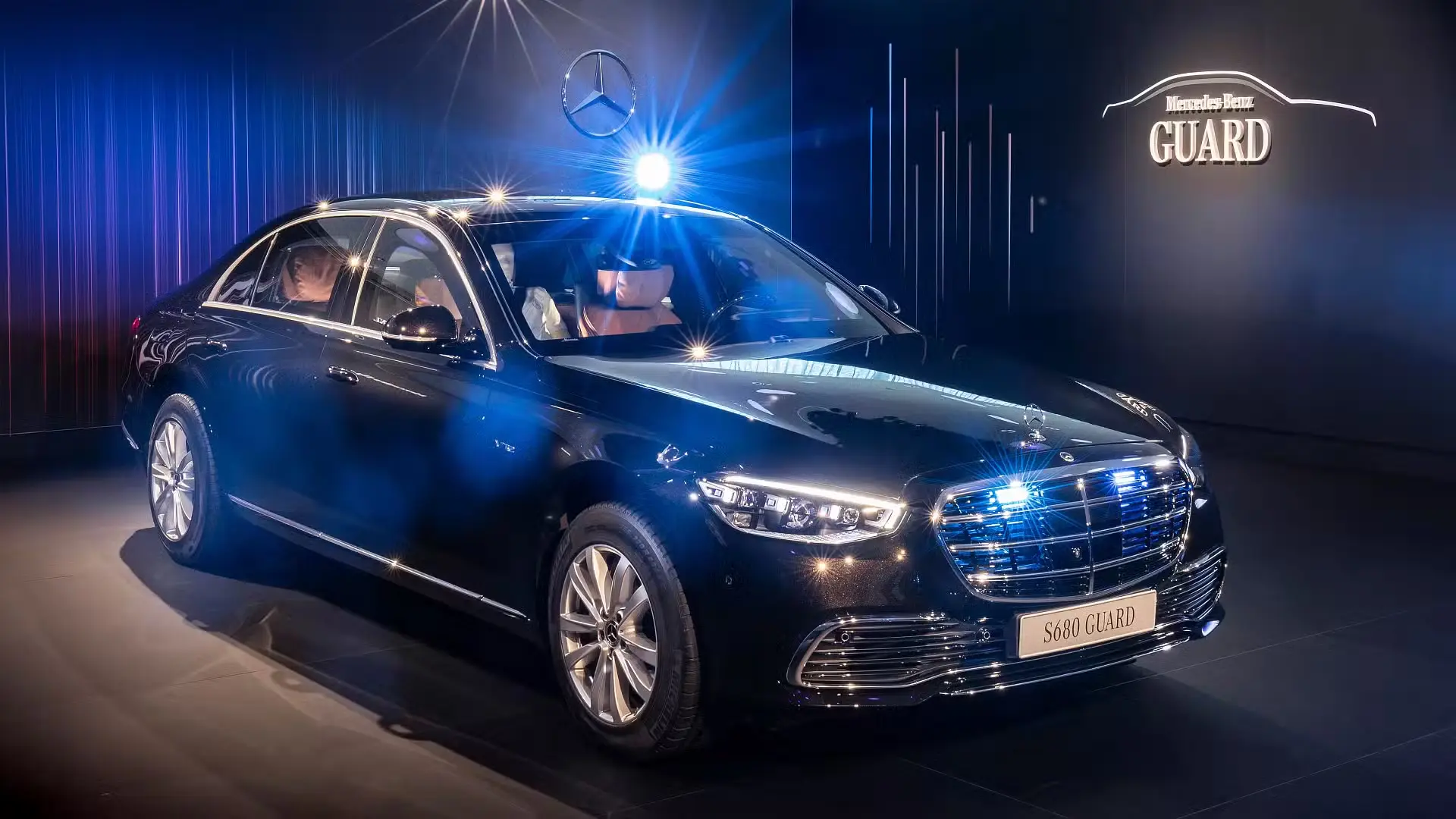
BYZAS operates exclusively factory-armored Mercedes-Benz Guard vehicles—not aftermarket conversions. This distinction matters significantly.
Factory vs. Aftermarket Armoring
Factory armoring integrates ballistic protection during vehicle manufacturing—not retrofitted afterward. Mercedes-Benz Guard vehicles undergo complete engineering to accommodate armor weight, maintain crash safety ratings, preserve handling dynamics, and retain manufacturer warranties. The company tests every Guard model to the same standards as civilian versions—frontal impact, side impact, rollover, and electronic stability control all function as designed despite 500-1000kg additional weight.
Aftermarket armoring bolts ballistic materials onto finished vehicles—creating compromises. Additional weight overloads suspension components designed for lower loads. Crash structures no longer function as engineered. Manufacturer warranties typically void. Many aftermarket conversions fail to maintain air conditioning capacity, struggle with heat buildup, or develop electrical problems as added weight stresses wiring harnesses.
Mercedes-Benz S-Class Guard
The S-Class Guard represents the flagship of civilian armored vehicles—combining S-Class luxury with B6/B7 protection. Clients experience:
- Full S-Class interior comfort and technology
- Executive rear seating with privacy glass
- Mobile office capability (Wi-Fi, power outlets, conference seating)
- Climate control maintaining cabin comfort despite armor weight
- Smooth, quiet operation indistinguishable from civilian S-Class
The S-Class Guard serves heads of state, Fortune 500 CEOs, and UHNW individuals requiring maximum discretion. From outside, the vehicle appears identical to civilian S-Class models—no visible antennas, markings, or modifications signal protection levels.
Mercedes-Benz G-Class Guard
The G-Class Guard combines SUV versatility with ballistic protection. The higher profile provides:
- Better visibility for threat detection
- Easier entry/exit (important for older principals or formal attire)
- All-terrain capability for rural facilities or poor infrastructure
- Commanding presence that provides psychological deterrence
- Space for luggage and security equipment
The G-Class Guard suits clients requiring practical protection—site inspections, rural travel, or scenarios where blending with luxury sedans isn’t the objective.
Why Mercedes-Benz?
Mercedes-Benz has manufactured armored vehicles longer than any competitor—over 90 years supplying governments, royal families, and security services globally. The company maintains dedicated armoring facilities, employs ballistics engineers, and tests vehicles to standards exceeding civilian requirements. Every Guard vehicle receives individual quality control certification.
This heritage matters operationally. When maintenance is required, Mercedes-Benz technicians understand Guard-specific systems. When replacement parts are needed, authorized dealers maintain inventory. When insurance questions arise, underwriters recognize factory armoring as meeting standards aftermarket conversions cannot achieve. View our Mercedes-Benz Guard fleet and specifications.
Turkey’s Security Landscape: When Armored Transport is Essential
Urban Congestion = Predictable Patterns
Istanbul’s traffic creates security vulnerabilities. Routes between Atatürk Airport and business districts in Levent or Maslak follow predictable corridors. Traffic jams immobilize vehicles for extended periods. Sophisticated threat actors study these patterns—identifying choke points, timing movements, and planning interdictions at locations where targets cannot maneuver.
Armored vehicles don’t prevent traffic jams, but they transform static exposure from critical vulnerability into manageable risk. If confronted while stationary, occupants remain protected while drivers execute evasive maneuvers or security teams respond.
Proximity to Conflict Zones
Turkey borders Syria, Iraq, and Iran—active conflict zones where weapons circulate, militant groups operate, and security situations can deteriorate rapidly. While Turkey’s interior remains stable, the country experiences spillover effects: weapons trafficking, sleeper cells, and individuals with combat experience.
For executives visiting Istanbul or Ankara, this reality feels distant—until intelligence reports identify specific threats or security services warn of plots. Armored transportation provides proportionate response without disrupting business operations or signaling panic.
Demonstration & Civil Unrest
Turkey experiences periodic political demonstrations, labor strikes, and civil unrest—particularly around government districts in Ankara and central Istanbul. Well-planned protests remain peaceful, but situations can deteriorate when rival groups clash or police responses escalate.
Armored vehicles provide protection if caught in proximity to unrest—glass breaks, objects thrown at vehicles, or situations where crowds surround cars all become manageable rather than crisis scenarios.
Targeted Crime
While Turkey’s overall crime rates remain moderate, targeting of high-value individuals occurs. Kidnapping for ransom, forced entry into vehicles at traffic lights, or robberies targeting jewelry and watches happen in major cities. Armored vehicles deter opportunistic targeting—criminals assess risk vs. reward, and vehicles broadcasting protection (even subtly) get bypassed for softer targets.
How Armored Vehicle Rental Works in Turkey
Advance Coordination (48-72 Hours Minimum)
Professional armored vehicle operations require advance planning:
- Initial Inquiry: Share itinerary, protection requirements, and operational constraints
- Risk Assessment: Security team reviews threats, routes, and timing
- Vehicle Assignment: Appropriate Guard model assigned (S-Class or G-Class, B6 or B7)
- Chauffeur Selection: Security-trained driver matched to mission profile
- Route Planning: Primary and alternate routes identified, checkpoints noted
- Communication Protocols: Emergency contacts, check-in procedures, crisis response
Last-minute requests (under 24 hours) are accommodated when vehicles and personnel are available, but advance planning allows proper preparation. Submit your armored vehicle inquiry for customized assessment.
Security-Trained Chauffeurs Included
BYZAS chauffeurs undergo training beyond defensive driving:
- Threat recognition and situational awareness
- Evasive driving and vehicle dynamics under stress
- Checkpoint navigation and interaction protocols
- Crisis communication and emergency response
- VIP etiquette and confidentiality standards
Chauffeurs aren’t bodyguards—they’re professional drivers with security training who understand their role in protection ecosystems. They coordinate with executive protection teams, follow security director instructions, and maintain operational security.
No Cross-Border Travel
Armored vehicles operate within Turkey only—no exceptions. Legal requirements, insurance limitations, and operational constraints prevent international movements. Clients requiring cross-border transport need separate arrangements in destination countries.
This restriction isn’t arbitrary—taking armored vehicles across borders creates customs complications, requires special permits, and introduces liability issues that professional operators avoid. Planning multi-country itineraries requires coordinating separate armored vehicle services in each jurisdiction.
Flexible Rental Duration
Rentals accommodate varied requirements:
- Airport Transfers: Single pickup or drop-off (4-6 hours minimum)
- Daily Rate: 8-10 hour coverage for meeting schedules
- Multi-Day Assignment: Dedicated vehicle and chauffeur for extended visits
- Monthly Arrangements: Long-term presence requiring ongoing protection
Pricing reflects protection level, duration, and operational complexity—but BYZAS doesn’t publish rates. Each mission receives customized quotation based on specific requirements.
What’s Included:
- Factory-armored Mercedes-Benz Guard vehicle (B6 or B7)
- Security-trained professional chauffeur
- Fuel, insurance, and operational costs
- Route planning and advance reconnaissance
- 24/7 operations center support
- Emergency response coordination
What’s Not Included:
- Executive protection teams (available separately)
- Accommodation for multi-day assignments
- Cross-border transport
- Specialized equipment beyond standard armored vehicle capability
Plan Your Secure Transportation in Turkey
Professional armored vehicle coordination for executives, diplomats, and high-risk travelers.
Request Armored Vehicle Quote →
Common Mistakes When Renting Armored Vehicles
Mistake #1: Treating Armored Vehicles Like Luxury Cars
Armored vehicles provide protection—not status. Clients sometimes focus on amenities while neglecting security protocols. The vehicle matters less than the operational framework: route planning, communication protocols, advance coordination, and crisis response procedures.
Professional security starts with threat assessment, not vehicle selection. Identify risks, determine proportionate responses, then select appropriate vehicles and procedures. Starting with “I want a bulletproof car” puts tools before strategy.
Mistake #2: Underestimating Planning Time
Armored vehicle operations require coordination. Last-minute bookings compromise security:
- Insufficient time for route reconnaissance
- Unable to coordinate with existing security teams
- Chauffeur selection rushed without proper vetting
- No contingency planning for changed circumstances
Client emergencies happen, and professional operators accommodate urgent requests—but understand that compressed timelines limit preparation and increase risk.
Mistake #3: Ignoring Local Context
Security measures appropriate in one country may be excessive or inadequate in another. Clients sometimes import security protocols from home markets without adapting to Turkey’s specific environment.
Turkey isn’t a war zone requiring military-grade security, but it isn’t Western Europe either where minimal protection suffices. Proportionate security matches context—armored vehicles with professional chauffeurs provide appropriate protection without the overhead of executive protection teams, chase vehicles, or overt security that attracts attention.
Mistake #4: Overlooking Operational Constraints
Armored vehicles cannot:
- Guarantee impossible timelines (traffic remains traffic)
- Cross international borders (legal and insurance limitations)
- Replace comprehensive security planning (vehicles are one component)
- Operate without proper advance coordination
Clients expecting bulletproof taxis discover that professional armored services function differently—requiring planning, coordination, and realistic operational understanding.
Mistake #5: Selecting Based on Price Alone
Armored vehicle rental isn’t a commodity service where all providers deliver equivalent quality. The cheapest option often means:
- Aftermarket armoring instead of factory protection
- Inadequately trained chauffeurs
- No operational support or crisis response capability
- Dubious insurance coverage or liability limitations
Professional operators charge appropriately for factory-armored vehicles, security-trained personnel, and operational infrastructure. Cost differences reflect capability differences—not just markup.
View our Mercedes-Benz Guard fleet and security specifications
Ready to Secure Your Travel in Turkey?
Get a customized armored vehicle security assessment from our team
Request Armored Vehicle Quote →
Frequently Asked Questions
What ballistic protection level do I need in Turkey?
Most corporate and diplomatic travel in Turkey requires B6 protection—defending against handguns and common rifle threats (AK-47 pattern weapons). B6 provides credible protection against opportunistic targeting, criminal threats, and low-sophistication attacks while maintaining reasonable weight and operational practicality.
B7 protection suits high-profile government officials, individuals facing specific threats, or missions in elevated-risk zones. Risk assessments should drive specifications—generic corporate travel rarely justifies B7’s additional weight and cost. BYZAS security consultants help clients match protection levels to threat environments.
Can armored vehicles cross international borders from Turkey?
No. Armored vehicles remain within Turkey due to customs regulations, insurance limitations, and operational constraints. Taking armored vehicles across borders requires special permits, creates liability complications, and introduces delays at checkpoints.
Clients requiring multi-country protection coordinate separate armored vehicle services in each jurisdiction—Turkish providers handle Turkey movements, adjacent countries manage their territories. International security firms coordinate these handoffs, but vehicles themselves don’t cross borders.
Are chauffeurs trained for security scenarios?
Yes. BYZAS chauffeurs receive security training beyond defensive driving: threat recognition, evasive maneuvers, checkpoint protocols, crisis communication, and VIP protection fundamentals. They aren’t bodyguards or executive protection agents—they’re professional drivers who understand their role in security operations.
Chauffeurs coordinate with executive protection teams when present, follow security director instructions, maintain operational security, and execute emergency protocols if situations deteriorate. Their training ensures armored vehicles function as intended within comprehensive security frameworks.
How much advance notice is required for armored vehicle rental?
Minimum 48-72 hours allows proper coordination: route planning, vehicle preparation, chauffeur assignment, and security briefings. Advance booking enables reconnaissance, contingency planning, and coordination with existing protection teams.
Last-minute requests (under 24 hours) receive accommodation when vehicles and trained personnel are available, but compressed timelines limit preparation. Emergency situations requiring immediate response get prioritized—understanding that operational constraints may limit options.
What’s included in armored vehicle rental pricing?
All-inclusive pricing covers:
- Factory-armored Mercedes-Benz Guard vehicle (specified protection level)
- Security-trained professional chauffeur (full assignment duration)
- Fuel, insurance, and operational costs
- Route planning and advance reconnaissance
- 24/7 operations support and emergency coordination
Pricing excludes executive protection teams (available separately), chauffeur accommodation for multi-day assignments, cross-border transport, and specialized equipment beyond standard armored capability. Each mission receives customized quotation based on protection level, duration, and complexity.
Do you provide executive protection teams with armored vehicles?
Executive protection services are available separately and integrate seamlessly with armored vehicle operations. Security teams coordinate with chauffeurs, manage threat environments around vehicles, handle advance work, and provide close protection during stops.
Most corporate clients require only armored vehicles with security-trained chauffeurs—not full protection details. High-profile principals, elevated threat environments, or specific intelligence may justify protection teams. BYZAS security consultants assess requirements and recommend proportionate security measures. Contact us for armored vehicle coordination and security consultation.
Are your armored vehicles conspicuous?
No. Our Mercedes-Benz Guard vehicles are factory-armored and meticulously designed to be visually identical to standard civilian models. This ensures a low-profile, discreet presence that does not attract unnecessary attention.
Can my security team inspect the vehicle before renting?
Yes. We understand the importance of verifiable security. For sensitive assignments, we can arrange secure viewing and physical inspections of our B6 and B7 fleet for your personal details or corporate security directors prior to deployment.
What is your protocol in the event of a mechanical failure?
We maintain a standby fleet of equivalent armored vehicles as part of our contingency planning. In the rare event of a mechanical issue, a replacement armored vehicle and extraction team are dispatched immediately to ensure uninterrupted protection and operational continuity.
Are your armored vehicles conspicuous?
No. Our Mercedes-Benz Guard vehicles are factory-armored and meticulously designed to be visually identical to standard civilian models. This ensures a low-profile, discreet presence that does not attract unnecessary attention.
Can my security team inspect the vehicle before renting?
Yes. We understand the importance of verifiable security. For sensitive assignments, we can arrange secure viewing and physical inspections of our B6 and B7 fleet for your personal details or corporate security directors prior to deployment.
What is your protocol in the event of a mechanical failure?
We maintain a standby fleet of equivalent armored vehicles as part of our contingency planning. In the rare event of a mechanical issue, a replacement armored vehicle and extraction team are dispatched immediately to ensure uninterrupted protection and operational continuity.
Conclusion: Security is Operations, Not Just Equipment
Armored vehicles represent one component of comprehensive security—not standalone solutions. Effective protection integrates threat assessment, route planning, communication protocols, crisis response procedures, and professional coordination. The vehicle provides ballistic protection; the operational framework ensures that protection functions as intended.
Turkey offers remarkable business opportunities, rich cultural experiences, and strategic regional positioning. Operating successfully here requires acknowledging security realities without overreacting to them. Armored vehicle rental provides proportionate protection—demonstrating duty of care, mitigating exposure, and maintaining operational security without the commitment and complexity of ownership.
For executives conducting due diligence, diplomats managing official visits, family offices protecting principals, or organizations operating in elevated-risk environments, professional armored transportation delivers peace of mind grounded in tangible capability. The difference between successful missions and disappointing outcomes often comes down to operational excellence—where experienced providers manage details that inexperienced travelers overlook.
BYZAS brings 50 years of automotive heritage and 20 years of luxury chauffeur expertise to armored vehicle operations in Turkey. Our Mercedes-Benz Guard fleet, security-trained chauffeurs, and nationwide coordination capability serve Fortune 500 companies, diplomatic missions, and ultra-high-net-worth individuals who understand that security begins with professional planning—not last-minute improvisation. Request your armored vehicle quote today.
Ready to Rent?
Review our B6/B7 inventory and secure your vehicle today. Check Armored Vehicle Availability ➜